13th May 2010
To
Shri Tejendra Khanna
Hon’ble Lt. Governor of Delhi
Raj Niwas
Delhi-110054.
Sub.- Regarding poor sanitation and negligence of MCD staff in Sonia Vihar Ward No. 272
Respected Sir
This is regarding poor management of sanitation services and negligence in duty by officials concerned in my ward.
Sonia Vihar is one of the largest ward geographically and it does not have proper sewage system also.
Sonia Vihar ward also do not have any "Dalav" and waste management is a big problem in the ward.
I am trying my level best since last three years to ensure a healthy environment in the ward but non cooperation from concerned officials is a major problem.
I am requesting you to please instruct officials to maintain cleanliness and sanitation in my ward.
Thanks
--
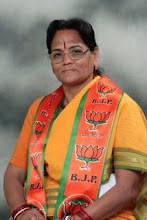
Dr. Annapurna Mishra
Municipal Councilor
Ward No. 272, Sonia Vihar
M.C.D.
Member- BJP
9958693272, 9818450082
Thursday, May 13, 2010
Thursday, April 22, 2010

Tuesday, March 30, 2010
Mohalla Sabha in Sonia Vihar
Councillor Mishra introduces direct democracy to the “hell” of an unauthorized colony
Conducts third Mohalla Sabha meeting in a fortnight at Sonia Vihar ward
New Delhi, Kumar’s eyes brim with tears as he shows a dark brown scar on his left leg to Annapurna Mishra, Sonia Vihar councillor, and a gathering of about 50 people from his neighbourhood.
The 19 year old boy is barely able to explain in a choked voice that he has been attacked more than once while trying to fill his bucket with water from a public tap that his Gali No.10 (block-A) shares with the neighbouring gali.
Public taps at Sonia Vihar being much fewer than needed, people often are ready to kill for drinking water.
“Main ek to tooti lagwaunga aur ek gali banwaunga (I must get a new public tap and a paved street),” he tells Mishra, like a child who demands to be compensated for being wronged.
Then he makes a profound statement: “Ye jagah nark hai (This place is a hell).”
No one among those who have gathered on this Sunday morning in the compound of ‘BR Model Public School’ at block-A of Sonia Vihar can disagree.
People of Sonia Vihar have been left to live alongside their own sewage and garbage; there is no drainage system, let alone sewers, and safai karmcharis don’t seem to lift a finger, let alone rubbish.
Galis of Sonia Vihar have large stretches of stagnant black-green water breeding mosquito larvae. Vacant plots of land have turned wholesale into pools of stagnant water. Stench fills the air.
Being an unauthorized colony, Sonia Vihar can neither receive development funds from the MCD nor MLA’s and Councillor’s own funds. However, the MLA and Councillor can jointly apply for funds that are sanctioned under the “Y head”.
“I am ready to bring as much ‘Y head’ funds as are needed for Sonia Vihar’s pressing needs. You will decide what your needs are and how you want to prioritize them,” Mishra tells her constituents at the third open Mohalla Sabha meeting that she has conducted in a week at this municipal ward in north-east Delhi.
Mishra’s mission: “I wish to change the system by letting people directly dictate their development. I will only carry out their orders.”
Last financial year, the local MLA and Mishra together brought Rs 3 crore for paving the galis, but it’s obviously not enough.
Om Prakash Singh of Gali No. 15 (block D) tells the Mohalla Sabha that he has been struggling to get his gali paved for last 15 years without success.
“They paved 10 galis in my neighborhood last year, but left ours. Why?”
Diwan Singh of block-C complains that his gali is being flooded with filthy water after the neighbouring gali was raised and paved. Munna Lal and Shiv Tiwari of block-E and Raviraj Sharma of block-A have similar complaints.
That highlights twin problems: Galis have been raised and paved without first providing for a system of drainage and the fact that only some of the galis, not all, have received the “grace”.
Ram Kinkar of block-B and Shiv Tiwari of block-E say no safai karmachari ever visits their areas. Raviraj Sharma adds that MCD has long stopped sprinkling anti-malarial and disease controlling chemicals in the area.
Mishra responds: “In two years of my tenure so far, I have fought hard with MCD to increase the number of safai karmacharis for SoniaVihar from 12 to 28. The fact is we need at least 400. For the time being, these 28 will have to be used as efficiently as we can.”
The Mohalla Sabha finally resolved that the safai karmacharis will be distributed between various areas and volunteers from those areas will supervise their work. Mishra promises the gathering that disease controlling chemicals will be started to be sprinkled regularly from next week.
Shrikant Tiwari of block-E, Sriramji of block-A, and several others complained that ration officials demand bribes for getting their ration cards made.
“I had submitted my application for ration card on 25 August last year. Since then I have been to ration office 8 times. They still have not issued my ration card,” says Tiwari.
Mishra says all ration wallahs have already been issued an ultimatum that they must end their corrupt practices in a month’s time or be prepared to face stern action.
“Fifteen days remain for them to change their ways. I am then bringing Assistant Commissioner (Food and Supply) and FSOs to this area. Each ration wallah will then face the public and their bosses.”
Kalawati of block-C tells the gathering that her husband suffers from TB at an advanced stage and so can’t work.
“I do beldaari work to earn Rs 50-100 daily. They have not issued me a ration card. There is money to be spent on my husband’s treatment. It’s difficult to support my family.”
Kapil, Mishra’s son who’s helping his mother organize Mohalla Sabha meetings, informs the gathering that MCD gives financial assistance to TB patients and he will try to get that assistance for Kalawati’s husband on the basis of his medical records.
Renu Tiwari of block-A says she will also need financial assistance for getting her daughter married.
Mishra responds by saying that MCD does provide such assistance. Renu Tiwari will need to apply with a copy of the invitation for the marriage ceremony.
Vir Bahadur Mistri and Ram Prassan say there are no street lights in their galis.
Kapil, Mishra’s son, responds: “Some areas don’t have street lights because there are no transformers there. We are following up with BSES. This work will surely be done.”
Diwan Singh of block-C points out that senior secondary school of the area has long been dysfunctional because of shortage of teachers.
“Although that school is run by Delhi government, not MCD, it’s my promise that we’ll speak with the MLA to get more teachers. You could expect results in 3-4 weeks’ time,” responds Mishra.
Ram Kinkar of block-B and Suman Mishra of block-A say their galis have no tooti (public tap). Arun Kumar and Ravi Raj Sharma (both of block-A) say there is no public tap from “Bhagat ji Mandir to Vinod Chaudhary’s home”.
“Shortage of drinking water is to be addressed by Delhi Jal Board (DJB), which is outside my jurisdiction. The MLA knows better. So I’ll speak with him,” Mishra tells the Mohalla Sabha.
As for drainage of water, Mishra points out that construction of nullahs along galis had already begun on two sides, but the work could take some months to complete.
“Drainage is the most pressing need of Sonia Vihar. The work has begun. While it lasts, it could be even more inconvenient to you. But we’ll have to bear with it. I promise you that we’ll have a functional drainage system by the time the work is complete.”
For the paving of galis, Mishra says she and the MLA will shortly be meeting with Engineer in Chief of MCD to discuss funds under the ‘Y head’.
“This time Y-head funds will be used not on what MLA and I like or think important, but on what you identify and prioritize as your needs. If you say a gali should be paved, it will be paved. That will be the big difference from the past.”
Mishra also promises that a contractor will be paid only after the people of the area express satisfaction with the quality of his public work.
“I have identified a land for building an MCD dispensary and also propose to build a community centre here,” she added.
Finally, Mishra has a big promise to make.“After the rainy season, we plan to start our campaign for regularization of Sonia Vihar. Be prepared for dharnas and demonstrations.
I need your cooperation.”
Mohalls Sabha voices support, as if saying, ‘we want more power over our lives and will no longer put up with hell’.
About ‘Mohalla Sabha’ meetings
A Mohalla Sabha is the body of all adult citizens (i.e. registered voters, in legal/formal sense) of a smaller residential unit (an area, block, or colony) in a municipal ward.
The meeting of a ‘Mohalla Sabha’ is an open meeting of local citizens (i.e. members) with their ward councilor and some local MCD officials.
Every household of the area/block/colony is sent a written notice of the meeting in advance.
The councillor tries to ensure the presence of MCD officials who will be required to respond to citizens’ queries and complaints.
As the councilor and local MCD officials listen, the citizens collectively discuss and debate their problems, suggest solutions, and decide what facilities/public works they want. They citizens also decide who among them is most deserving of government aid or social security benefits.
All decisions are taken either consensually or through voting.
The citizens are able to directly question the councillor and local MCD officials present.
The councillor and the officials, on their part, respond to complaints and questions; they also offer clarifications and solutions. The councillor also commits himself/herself to the things that he/she can do or will try to do and points out to the things that are outside his/her jurisdiction.
The councillor also makes a commitment that contractors will be paid only after the local people have expressed satisfaction with the public work in question.
The principle governing the Mohalla Sabha meeting is: citizens will decide what they want and their representative (i.e. the councillor) will merely carry out their will within the limits of his/her jurisdiction, the law, and the availability of funds.
The minutes of the meeting, including the decisions taken, are signed by each participant, and copies are sent to each household of the area.
The participants also decide the time and place of the next Mohalla Sabha meeting in which the councilor will present a report of the progress on implementation of the decisions taken earlier.
In addition to the written notice of a Mohalla Sabha meeting, the councilor also sends at least one letter a month to each household of the area, informing them of the progress on the tasks that were set for him in the last meeting.


Monday, September 7, 2009
Published in DAINIK JAGRAN on 7th Sept. 2009
अब शासन में आम जनता की सीधी भागीदारी
Sep 07, 12:21 am

सुधीर कुमार, पूर्वी दिल्ली
सच्ची लोकशाही केंद्र में बैठे चंद आदमी नहीं चला सकते, वह तो हर गांव के लोगों द्वारा चलाई जानी चाहिए। सत्ता का केंद्र दिल्ली, कोलकाता या मुंबई जैसे बड़े नगरों तक सीमित है। मैं उसे भारत के सात लाख गांवों में बांटना चाहूंगा। राष्ट्रपिता महात्मा गांधी ने यह परिकल्पना 1909 में लिखी हिंद स्वराज पुस्तक में की थी, जबकि उनकी यह परिकल्पना अब साकार रूप लेने जा रही है। जहां इसकी पहल यमुनापार के दो निगम वार्डो में शुरू हो चुकी है।
किस मोहल्ले में किस तरह की सड़क बनाई जानी है और कहां नाली बननी है, किस पार्क को विकसित करना है और किस गरीब महिला को पेंशन देना है-इसका निर्धारण पार्षद नहीं, आम लोग तय कर रहे हैं। इसे मूर्त रूप दिया जा रहा है मोहल्ला सभाओं के जरिये। त्रिलोकपुरी व सोनिया विहार संभवत: भारत के दो पहले ऐसे निगम वार्ड हैं जहां सीधे व सच्चे लोकतंत्र की अलख जग चुकी है। दोनों वार्डो में मोहल्ला सभाओं के जरिये लोग सीधे तौर पर शासन में दखल देने लगे हैं। इसी सफलता से उत्साहित राजधानी के आधा दर्जन से अधिक पार्षद इसे अपने यहां शुरू कराने की सहमति दे चुके हैं। इनमें पूर्व मेयर आरती मेहरा व निगम के शाहदरा साउथ जोन के चेयरमैन रवि प्रकाश शर्मा भी शामिल हैं।
अभियान शुरू करने में लोकराज अभियान नामक स्वयंसेवी संस्था ने महत्वपूर्ण भूमिका निभाई है। संस्था के मनीष सिसोदिया ने कहा कि वास्तविक लोकतंत्र तभी है जब जनता का आदेश चले जहां अगर उसकी एफआईआर नहीं लिखी जा रही हो तो थानाध्यक्ष को हटाने तक का अधिकार जनता के पास हो। वर्तमान लोकतंत्र में जनता सिर्फ पांच साल में एक बार वोट देने का कर्त्तव्य भर निभाती है, जबकि इसके बाद का काम नौकरशाहों व जनप्रतिनिधियों के पास सुरक्षित हो जाता है।
ऐसे काम करती हैं मोहल्ला सभाएं
करीब दो माह पहले लोकराज अभियान के सहयोग से त्रिलोकपुरी व सोनिया विहार वार्ड में मोहल्ला सभा की शुरुआत हुई। सबसे पहले एक निगम वार्ड को दस हिस्सों में बांटा गया। एक हिस्से में करीब चार हजार मतदाताओं को रखा गया, जिसे मोहल्ले का नाम दिया गया। सभी मोहल्ला सभा की महीने में एक बार बैठक होती है। निगम पार्षद की ओर से सभी मतदाताओं को महीने में दो पत्र लिखे जाते हैं। एक पत्र मतदाताओं को आमंत्रित करने के लिए दिया जाता है जिसमें उन्हें तय दिन व जगह पर बुलाया जाता है। जहां संबंधित विभाग के अधिकारी भी आते हैं। निगम पार्षद व अधिकारी जनता से सीधे रूबरू होते हैं। जनता उनसे सवाल पूछती है, सुझाव देती है और कार्रवाई की मांग करती है। मौके पर ही पार्षद व अधिकारी योजनाओं को मंजूर करते हैं। काम होने के बाद सरकारी ठेकेदार को पेमेंट तभी की जाती है जब उस पर मोहल्ला सभा की मुहर लगती है।
क्रांतिकारी बदलाव : पार्षद
त्रिलोकपुरी के पार्षद डॉ. हरीशंकर कश्यप ने कहा कि निश्चित रूप से यह क्रांतिकारी बदलाव है। पहले दिन से ही लोगों का अपार सहयोग मिल रहा है। सोनिया विहार वार्ड की पार्षद अन्नपूर्णा मिश्रा ने कहा कि जनप्रतिनिधि व जनता एक दूसरे के करीब आ रहे हैं। साथ ही अधिकारियों पर काम करने के लिए दबाव बढ़ रहा है।
Tuesday, August 4, 2009
Try to empower people and you will be blamed as Moist
DEMOCRACY AND THE PRICE OF IT!!
Corrupt leaders and officers have started spreading rumours about Dr. Annapurna Mishra to stop her initiative of bringing power to the people.
From BJP workers to Nigam Parshads to Party leaders, everyone is discussing that Municipal Councillor Dr. Annapurna Mishra has relation with Moist.
The only obvious reason was the new initiative be her to introduce citizen's democracy through Mohalla Sabhas in her ward.
The offfcers and leaders whose ilegal money and corruption is being stopped through this new of getting things done through people, have started spreading these rumours related to IB doing a profile check of hers.
I have received this information from my colleagues and councillors in townhall, from my party workers in the ward.
I am writing this letter to inform that the people who are spreading such rumours are those who are afraid that their corruption network will be abolished if this system gets recognition and acceptance by common people.
I am going to file a FIR against these people.
I have written letter to my party leaders seeking their intervention into the matter.
A complaint to the CBI will also be forwarded by me.
I request all the concerned citizen to come forward against these corrupt practices.
For details on my initiative and the reason behind these rumours, visit- www.annapurnamishra.blogspot.com
Corrupt leaders and officers have started spreading rumours about Dr. Annapurna Mishra to stop her initiative of bringing power to the people.
From BJP workers to Nigam Parshads to Party leaders, everyone is discussing that Municipal Councillor Dr. Annapurna Mishra has relation with Moist.
The only obvious reason was the new initiative be her to introduce citizen's democracy through Mohalla Sabhas in her ward.
The offfcers and leaders whose ilegal money and corruption is being stopped through this new of getting things done through people, have started spreading these rumours related to IB doing a profile check of hers.
I have received this information from my colleagues and councillors in townhall, from my party workers in the ward.
I am writing this letter to inform that the people who are spreading such rumours are those who are afraid that their corruption network will be abolished if this system gets recognition and acceptance by common people.
I am going to file a FIR against these people.
I have written letter to my party leaders seeking their intervention into the matter.
A complaint to the CBI will also be forwarded by me.
I request all the concerned citizen to come forward against these corrupt practices.
For details on my initiative and the reason behind these rumours, visit- www.annapurnamishra.blogspot.com
Monday, July 20, 2009
It takes a village to bring in amenities
(Published in Times of India on 20th July 2009)
NEW DELHI: A few kilometres from the Sonia Vihar treatment plant, there's a quiet revolution taking place.
Badarpur Khadar, a small village with barely 1,500 inhabitants, may not seem much it's a village without electricity, school, health centre, ration shop or even pukka roads. But if activities of the past few weeks are any indication, this "unauthorized colony'' is taking a small step towards participatory governance that could spell big success for citizens all over. On July 12, residents of Badarpur Khadar, for the first time, collectively took decisions and told their local representative what they wanted. In an open mohalla sabha meeting with Annapurna Mishra, Sonia Vihar councillor, over 100 men and women of Badarpur Khadar decided they wanted a school, ration cards for every household, voter ID cards for every adult, widow and old-age pension for eight identified women, and a pukka road from "Babu's home to Jafru's home''. It's an experiment in participatory governance which, Mishra says, is already bearing fruit. "My first mohalla sabha was in E-block, Sonia Vihar, with the second one being in Badarpur Khadar. Initially, people were skeptical but they saw I was serious about the effort and the feedback has been phenomenal,'' says Mishra. Accompanied by MCD officials, Mishra conducts the sabha with a clear-cut agenda ask the people directly what they want. "I'm a first-time councillor. Instead of spending public funds on projects which people may not want, I wanted to ask them what they really wanted. The idea of the mohalla sabha was suggested by Parivartan, a local NGO,'' adds the councillor. Mishra has about Rs 50 lakh in councillor's funds. In addition, MCD also spends funds under various heads. These would now be spent according to the will of the people, she says. The sabha is especially useful for a village like Badarpur Khadar, which has woefully few resources. This village has never had any school and most children don't go to school. A few go to those in Loni or Mirpur in UP. After the Sunday sabha, village adults decided that a 10 bigha plot of land belonging to gram samaj (common land) would be set aside for a school. Villagers also claimed that hardly 10-15 out of the 180 households have ration cards. Solution: a team of local volunteers would collect documents from all households and complete the formalities for getting their ration cards made. Also, names of eight women were suggested so that their pension accounts could be opened with the government. That's not all. Next on agenda is voter ID cards, and more importantly, a pukka road. At the sabha, Soopanji and one Hashim Ali proposed that the path from Babu's home to Jafru's home should first be turned into a pukka road. After others voiced their agreement, MCD officials conferred with the two to confirm the location of the proposed road and took notes. Moreover, the village doesn't have a dispensary or primary health centre (PHC). Mishra said she suspected the village might not have enough population to qualify for a PHC, but she would nevertheless try. "What I can do immediately is to send mobile health vans here,'' she promised. Finally, a list of the tasks set by the mohalla sabha for Mishra was read out and the date of the next meeting was decided. The sabha in Badarpur Khadar is not a one-off phenomenon. While Mishra says she's committed to the experiment, nearby councillor Hari Shankar Kashyap of Trilokpuri is also planning to start the sabhas. It's a movement that could well change the way governments function, admit politicians. Adds Mishra, "It obviously makes me more accountable. But if I can make a difference, it ultimately reflects well on my political career and means progress for the ward. I'm okay with that.'' So are residents of Badarpur Khadar.
NEW DELHI: A few kilometres from the Sonia Vihar treatment plant, there's a quiet revolution taking place.
Badarpur Khadar, a small village with barely 1,500 inhabitants, may not seem much it's a village without electricity, school, health centre, ration shop or even pukka roads. But if activities of the past few weeks are any indication, this "unauthorized colony'' is taking a small step towards participatory governance that could spell big success for citizens all over. On July 12, residents of Badarpur Khadar, for the first time, collectively took decisions and told their local representative what they wanted. In an open mohalla sabha meeting with Annapurna Mishra, Sonia Vihar councillor, over 100 men and women of Badarpur Khadar decided they wanted a school, ration cards for every household, voter ID cards for every adult, widow and old-age pension for eight identified women, and a pukka road from "Babu's home to Jafru's home''. It's an experiment in participatory governance which, Mishra says, is already bearing fruit. "My first mohalla sabha was in E-block, Sonia Vihar, with the second one being in Badarpur Khadar. Initially, people were skeptical but they saw I was serious about the effort and the feedback has been phenomenal,'' says Mishra. Accompanied by MCD officials, Mishra conducts the sabha with a clear-cut agenda ask the people directly what they want. "I'm a first-time councillor. Instead of spending public funds on projects which people may not want, I wanted to ask them what they really wanted. The idea of the mohalla sabha was suggested by Parivartan, a local NGO,'' adds the councillor. Mishra has about Rs 50 lakh in councillor's funds. In addition, MCD also spends funds under various heads. These would now be spent according to the will of the people, she says. The sabha is especially useful for a village like Badarpur Khadar, which has woefully few resources. This village has never had any school and most children don't go to school. A few go to those in Loni or Mirpur in UP. After the Sunday sabha, village adults decided that a 10 bigha plot of land belonging to gram samaj (common land) would be set aside for a school. Villagers also claimed that hardly 10-15 out of the 180 households have ration cards. Solution: a team of local volunteers would collect documents from all households and complete the formalities for getting their ration cards made. Also, names of eight women were suggested so that their pension accounts could be opened with the government. That's not all. Next on agenda is voter ID cards, and more importantly, a pukka road. At the sabha, Soopanji and one Hashim Ali proposed that the path from Babu's home to Jafru's home should first be turned into a pukka road. After others voiced their agreement, MCD officials conferred with the two to confirm the location of the proposed road and took notes. Moreover, the village doesn't have a dispensary or primary health centre (PHC). Mishra said she suspected the village might not have enough population to qualify for a PHC, but she would nevertheless try. "What I can do immediately is to send mobile health vans here,'' she promised. Finally, a list of the tasks set by the mohalla sabha for Mishra was read out and the date of the next meeting was decided. The sabha in Badarpur Khadar is not a one-off phenomenon. While Mishra says she's committed to the experiment, nearby councillor Hari Shankar Kashyap of Trilokpuri is also planning to start the sabhas. It's a movement that could well change the way governments function, admit politicians. Adds Mishra, "It obviously makes me more accountable. But if I can make a difference, it ultimately reflects well on my political career and means progress for the ward. I'm okay with that.'' So are residents of Badarpur Khadar.
Thursday, July 16, 2009
Development for the people, by the people in Delhi
July 15th, 2009 - 5:41 pm ICT by IANS -
By Shweta Srinivasan and Mayank Aggarwal
New Delhi, July 15 (IANS) Two municipal councillors in the national capital have decided to put “power back into the public’s hands” by choosing to hear them out before undertaking any development work in their areas.
Hari Shankar Kashyap and Annapurna Mishra, municipal councillors of Trilok Puri and Sonia Vihar wards, respectively, have tied up with Swaraj Campaign - a programme initiated by a group of NGOs under which the councillor meets people via open public meetings called “mohalla sabhas” and carries out development work as per their needs.
Residents complain and he listens patiently because Hari Shankar Kashyap, municipal councillor from a poorly developed area in east Delhi, feel that those who voted him to power can ask him anything.
“After all the public voted me to power. They should be allowed to see change as per what they dictate and prioritise. I want to put power back into the public’s hands,” Kashyap told IANS.
After holding two meetings with his constituents in the last two weeks, the recent one being a gathering in Pocket-III of Mayur Vihar, Kashyap has decided to divide his Rs.5 million ward development fund into eight parts.
“People know that they can use this fund for development work. Payment for any of the infrastructure projects that are going on will not be cleared unless they meet the residents’ satifaction. Projects will be decided as per priority,” said Kashyap.
Residents are informed about the meetings in advance so that they can be prepared.
Mishra also held one such meeting in Badarpur Khadar village. Around 100 residents spelt out their demands to her in the presence of other Municipal Corporation of Delhi (MCD) officials.
Residents complained that the village of 1,500 had no electricity, no school, no ration shop, no medical facilities, no tarred roads, and no flush toilets.
“This village has never had any school. Most children don’t go to school. A few of them go to schools in Loni or Mirpur in Uttar Pradesh. So a school should be our first priority,” villager Mahabir Singh told Mishra.
After listening to the complaints, Mishra told the gathering: “From today, you will directly dictate the development of your village. I’ll try my best to carry out your will. You have voted me into power.”
Mishra agreed that a school, ration cards for every household, identity cards for every adult, widow and old age pension for eight women, and a tarred road would be commissioned soon using Rs.5 million from her ward development fund.
Mishra has decided to take up the issue of setting up a school with the MCD.
Both councillors felt that others should also follow in their footsteps and get back to the people.
“I don’t know if other councillors will conduct such meetings. They will if they start believing in the welfare of the people who choose them,” said Kashyap.
“A few MCD councillors and officials have already started complaining against this model of grassroots democracy because they won’t be able to make money in an environment of transparency,” said Mishra.
One of the campaign’s core initiators is Magsaysay award winner and Right to Information (RTI) activist Arvind Kejriwal.
“This mohalla sabha is not a one-off affair. These meetings will now happen regularly. For now, it has materialised only in two wards - about a dozen more MCD councillors have given a positive response to this and will soon start conducting these meetings,” Kejriwal told IANS.
“It is interesting to see that people’s needs and demands are so limited. Various governments and the municipality spend crores of rupees but people are still dissatisfied because the money is not spent on what people want.” he added.
Another activist associated with the campaign said: “More and more councillors are realising that this will keep them in touch with their constituents and later it could translate into votes for them.”
Subscribe to:
Posts (Atom)